

there are 8 million stories of esu,
this is just one of them
Detective Michael Corr, ESU (Ret.)
click here for PAST STORIES
RESTORING THE RANKS: ESU and the Aftermath of New York City’s Fiscal Crisis
On April 16, 1986, the NYPD’s Emergency Service Unit (ESU) reached a long-awaited milestone: it was finally restored to its pre-1975 strength. Truck 4 returned to the Bronx and Truck 7 to Brooklyn. Truck 9 returned home to Queens after an eleven year absence; they have been operating out of the 75th Precinct in Brooklyn.
For ESU, it marked the end of a long and difficult chapter—one that began during the darkest financial crisis in New York City’s history.
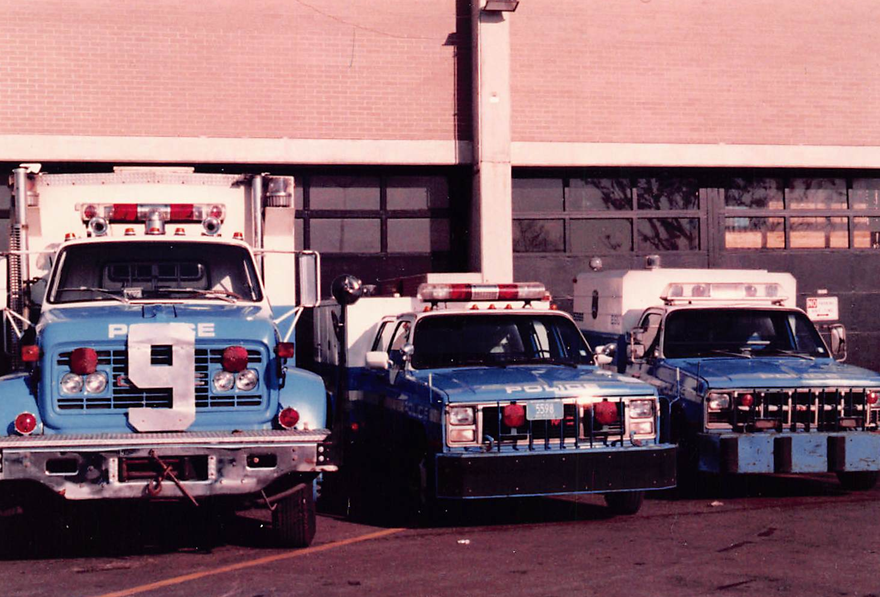
ESS Truck 9
the gathering storm
As dawn broke on January 1, 1975, the outlook for New York City—and much of New York State—was increasingly ominous. The economic warning signs of 1974 had given way to a full-blown fiscal emergency.
Mayor Abraham Beame, a former New York City Comptroller elected in 1974, was now confronting a staggering 3.3 billion dollar budget deficit. At the same time, newly sworn-in Governor Hugh Carey faced fiscal challenges of his own, though none matched the severity of New York City’s crisis. Across the region, financial strain was already impacting public services. Even something as routine as tolls on the Southern State Parkway reflected the pressure, increasing 150 percent—from 10 cents to 25 cents. (Editor’s note: The toll was removed in 1978)
JULY 1, 1975: THE BREAKING POINT
The crisis reached its tipping point on July 1, 1975, the start of the City’s fiscal year. On that day, the reality of New York City’s financial collapse hit its workforce with full force.
More than 50,000 municipal employees were laid off or terminated. Among them were 5,034 NYPD police officers, 2,127 firefighters, 2,934 sanitation workers, and 534 correction officers, impacting 25 mayoral agencies. An additional 21,442 employees from non-mayoral agencies—including the Board of Education, Health and Hospitals Corporation, and CUNY—also lost their jobs.
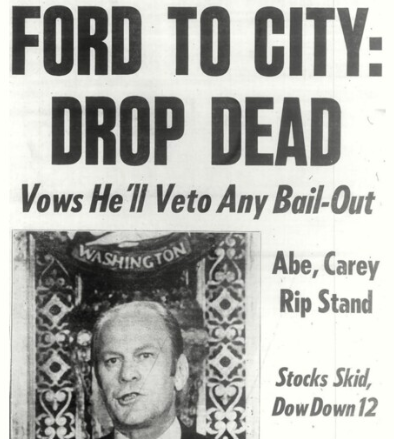
President Ford wasn’t helpful. 1975 local newspaper headline.
Within the NYPD, no unit was spared. The Narcotics Division lost two thirds of its manpower. The Youth Unit was disbanded entirely. The Organized Crime Control Bureau (OCCB) was gutted, with multiple sub-units eliminated. Precincts were consolidated, and patrol strength was stretched dangerously thin.
The Emergency Service Unit was hit hard. Approximately 150 ESU officers were reassigned to patrol. Trucks 4 and 7 were disbanded, and Truck 9 was relocated from Queens to Brooklyn. ESU’s citywide coverage was reduced at a time when the need for specialized response had never been greater.
The Fire Department faced equally severe cuts, closing 26 companies across the five boroughs.
A CITY ON THE EDGE
To prevent default on its bond obligations, New York State created the Emergency Financial Control Board (EFCB) to oversee the City’s finances. The Municipal Assistance Corporation (MAC) was also established to restore access to credit markets. These measures proved critical in stabilizing the City—but they came at a steep cost.
Mayor Beame implemented aggressive cost-cutting measures, including wage and hiring freezes. Having served under Mayor John Lindsay, Beame understood the City’s spending problems and believed austerity could avert collapse. Instead, the prolonged hiring freeze further eroded the NYPD’s strength, reducing its ranks from approximately 31,000 officers to just 22,000 by early 1978.
The consequences were felt citywide.
They were most visible on the night of July 13, 1977.
A lightning strike at an electrical substation in Buchanan, New York, triggered a cascading power failure that plunged the entire city into darkness. What followed was chaos. Looting and arson spread rapidly. Thirty-five blocks in Brooklyn were destroyed. Citywide, 1,616 stores were looted, over 1,000 fires were reported—including 14 multiple-alarm blazes—4,500 looters were arrested, and more than 550 police officers were injured.
The blackout laid bare what many already knew: the City’s public safety infrastructure was stretched to its limits.
THE LONG ROAD BACK
Recovery did not happen overnight. By 1978, most of the laid-off officers had been rehired, and by 1979, new recruits slowly began entering the Police Academy. In January 1982, the NYPD hired its largest class ever—graduating more than 3,000 recruits.
Even so, rebuilding the department took years. It was not simply a matter of numbers, but of restoring experience, capability, and confidence.
For ESU, the recovery was especially significant. Throughout the crisis, the unit had continued to operate with reduced manpower and fewer trucks, handling everything from rescues and collapses to barricaded suspects and emotionally disturbed people. It adapted, improvised, and endured.
Finally, in April 1986—more than a decade after the cuts—ESU returned to full strength.
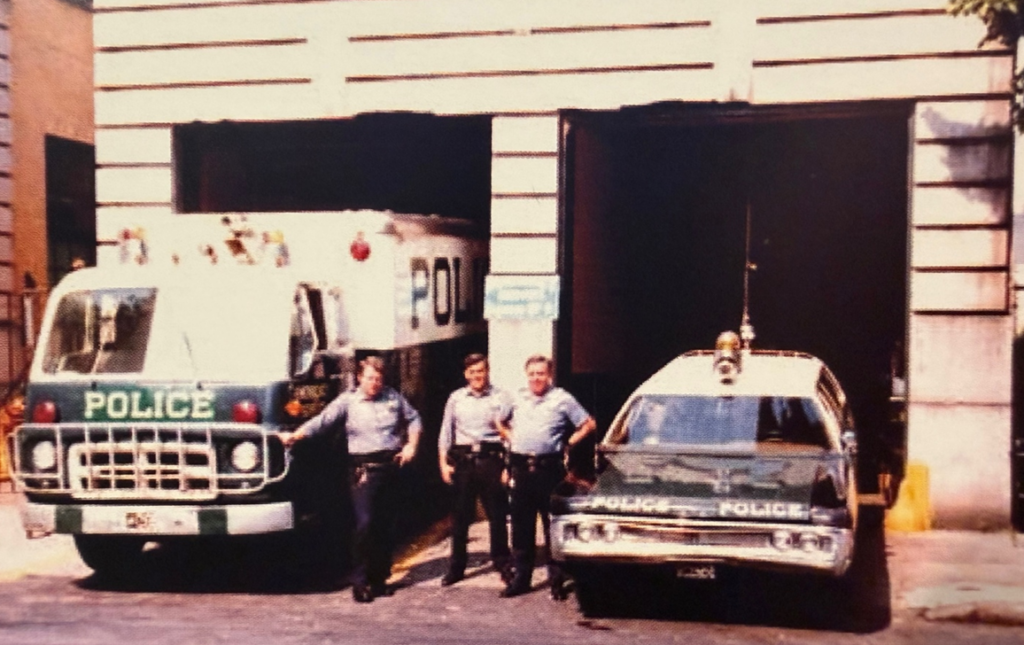
1970’s ESS 9 crew
legacy of the crisis
The fiscal crisis of the 1970s reshaped the NYPD in lasting ways. Precinct consolidations, reduced patrol strength, and the loss of specialized units forced the department to rethink how it operated.
For ESU, the experience proved transformative. Out of necessity, it evolved into a hybrid unit—combining rescue, tactical response, and crisis management—capable of handling the most complex and dangerous situations in the city.
The restoration of ESU in 1986 was more than a return to numbers. It was a symbol of recovery—of a city, a department, and a unit that had endured one of the most challenging periods in its history and emerged stronger for it.
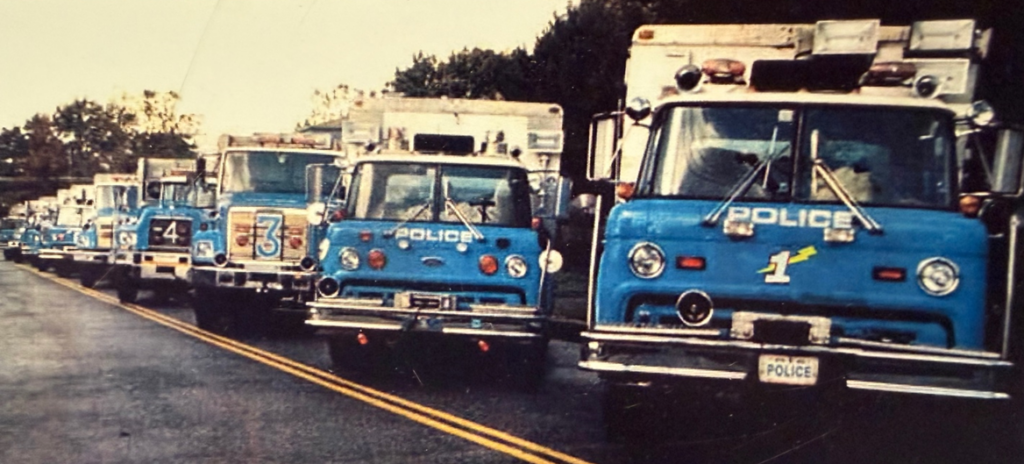
A rare gathering of all ten Emergency Trucks, at the funeral for ESS 6 member PO Patrick Fazio
Up next: The restoration of Truck # 17, coming next
Comments